
Conjunctivitis

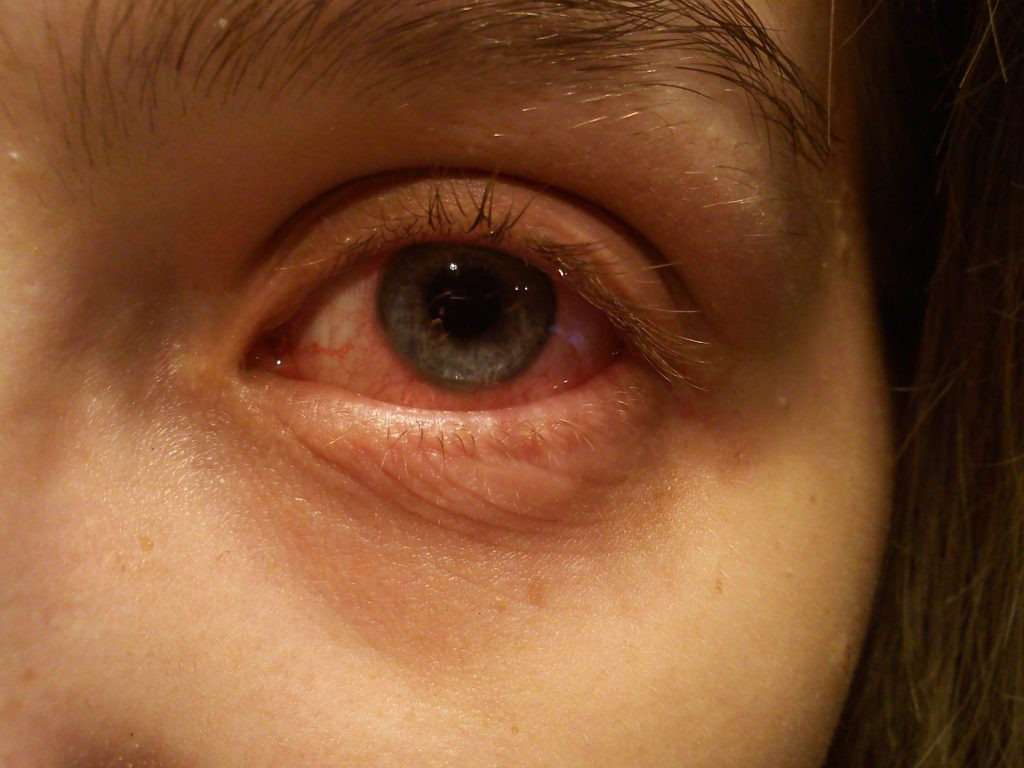
A red, irritated eye. Usually caused by a virus and usually clears up by itself.
In short

  • The conjunctiva is the thin membrane over the white of the eye. When it is inflamed, the eye turns red.
  • Usually caused by a virus, often with a cold. Sometimes by bacteria or an allergy.
  • Your vision stays normal; the eye feels burning or gritty rather than truly painful.
  • It usually clears up by itself within one to two weeks. Antibiotics are rarely needed.
  • Wash your hands often and use your own towel: viral conjunctivitis is contagious.
An eye with conjunctivitis
An eye with conjunctivitis Daemonanyndel, CC BY-SA 3.0. Via Wikimedia Commons.

Symptoms

  • Red eye, often first one and then both
  • Burning or gritty feeling, as if there is sand in the eye
  • Watery or sticky discharge; eyelids stuck together in the morning
  • Vision stays clear after blinking

How it develops

Usually a virus, often following a cold. Sometimes bacteria. Allergy, smoke, chlorinated water or contact lenses can cause the same picture. Viral conjunctivitis is contagious.

Treatment

  • Viral conjunctivitis clears by itself, usually within one to two weeks. Cooling and artificial tears ease the symptoms.
  • Bacterial conjunctivitis may be treated with antibiotic ointment or drops.
  • For allergy, antihistamine drops and avoiding the trigger help.
  • Good hand hygiene limits spread. Leave contact lenses out while the eye is red.

When to get help the same day

Contact your GP or the out-of-hours GP service (huisartsenpost) straight away if you have:

  • Reduced vision, or blurring that does not clear after blinking
  • Severe pain rather than irritation
  • Strong sensitivity to light
  • A red eye in someone who wears contact lenses
  • Symptoms after an injury or eye surgery

This page is a short summary and does not replace a consultation. Want to know how the eye works? See The eye.