
Dry eyes

Too little tear fluid, or tears that evaporate too quickly. Often, surprisingly, watery eyes.
In short

  • Dry eyes are very common and usually well controllable.
  • You notice burning, gritty or tired eyes, or fluctuating blurred vision. Often the eyes actually water.
  • In most people the tears evaporate too quickly because the oil glands in the eyelid margin do not work well.
  • At the consultation we examine your tear film, eye surface and eyelid margins to find the right approach.
  • Treatment usually means artificial tears, daily warmth and eyelid care. You notice a difference after a few weeks.
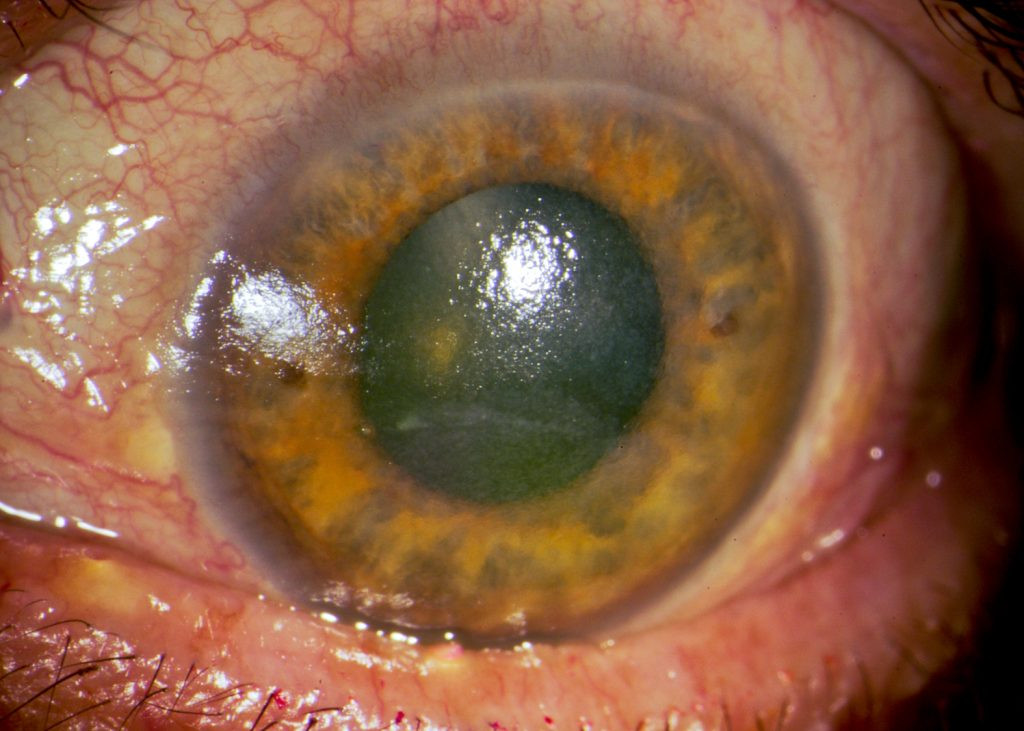
Dry eye made visible with yellow dye
Dry eye, made visible with yellow dye Jonathan Trobe, University of Michigan Kellogg Eye Center, CC BY 3.0. Via Wikimedia Commons.

Symptoms

  • Burning, scratchy or gritty feeling, worse at the end of the day
  • Fluctuating blurred vision that clears briefly after blinking
  • Watery eyes: the eye reacts to irritation with thin fluid
  • Sticky eyelids or crusts on the lashes on waking
  • More trouble with wind, air conditioning, car heating and long screen work

How it develops

Most often the tears evaporate too fast because the oil glands in the eyelid margin are blocked. Less often the tear gland makes too little fluid, for example due to age, menopause, medication or Sjögren’s syndrome. Screen work, dry air, contact lenses and previous eye surgery make it worse.

Treatment

  • Preservative-free artificial tears, several times a day if needed; a gel or ointment at night.
  • Daily warmth (warm flannel or heat mask), gentle massage and cleaning of the eyelid margin.
  • Screen breaks and conscious blinking; a screen below eye level reduces evaporation.
  • Checking whether medication plays a role, such as diuretics, antihistamines or some antidepressants.
  • If not enough: punctal plugs, or prescription medication via your GP or ophthalmologist.

When to get help the same day

Contact your GP or the out-of-hours GP service (huisartsenpost) straight away if you have:

  • Pain instead of irritation
  • Vision that stays reduced
  • A white or cloudy spot on the cornea
  • Dry eyes together with a dry mouth and joint complaints

This page is a short summary and does not replace a consultation. Want to know how the eye works? See The eye.