
Diabetic retinopathy

Damage to the small blood vessels in the retina due to diabetes. Often noticed late.
In short

  • Diabetes can damage the small blood vessels in the retina: diabetic retinopathy.
  • At first you notice nothing, which is why regular retinal checks are so important.
  • Good control of blood sugar, blood pressure and cholesterol, and not smoking, slow the damage most.
  • If needed, the ophthalmologist treats with laser or injections in the eye.
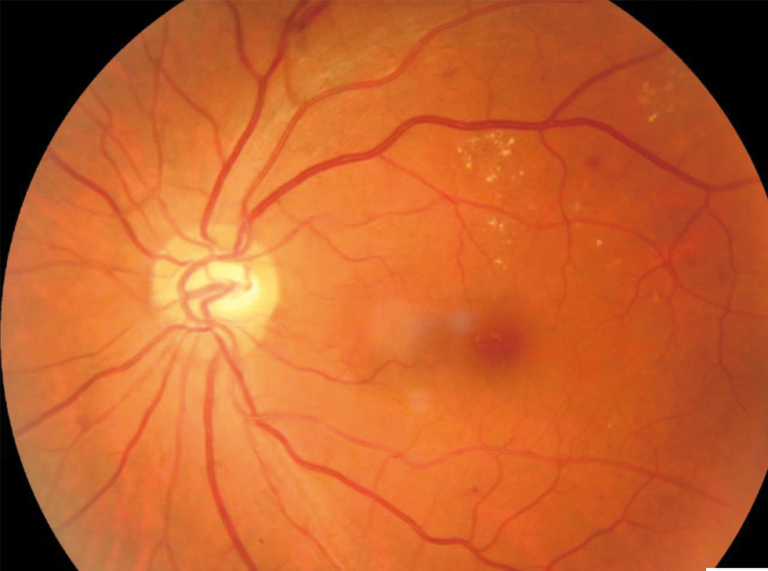
Haemorrhages and deposits on the retina in diabetes
Small haemorrhages and fatty deposits on the retina in diabetes Hao, Liu, Li e.a., CC BY 4.0. Cropped. Via Wikimedia Commons.

Symptoms

  • No symptoms for a long time, even when damage is present
  • Fluctuating blurred vision with strongly varying blood sugar
  • Later spots, blurred areas or gaps in your vision
  • Suddenly many spots can mean bleeding in the vitreous

How it develops

Long-term high blood sugar damages the small retinal vessels. They leak or close off, the retina runs short of oxygen and forms new, fragile vessels. High blood pressure and smoking speed this up.

Forms and stages

  • No retinopathy (R0): no abnormalities; check every two to three years.
  • Mild (R1): small bulges and pinpoint bleeds; usually yearly check.
  • Pre-proliferative (R2): more bleeds and abnormal vessels; referral to the ophthalmologist.
  • Proliferative (R3): new fragile vessels that can bleed; quick referral and treatment.
  • Maculopathy (M1): leakage at the macula; can occur at any stage.

Treatment

  • Regular retinal checks with a photo or scan; how often depends on the findings.
  • The most important treatment is control of blood sugar, blood pressure and cholesterol.
  • In more advanced stages laser treatment or injections in the eye.
  • Fluid in the macula is treated with injections.
  • Do not smoke; smoking speeds up damage to the small vessels.

When to get help the same day

Contact your GP or the out-of-hours GP service (huisartsenpost) straight away if you have:

  • Suddenly many new spots or a red haze
  • A curtain or shadow in your vision
  • Rapidly decreasing vision
  • Pain with a red eye: that does not fit diabetes and needs its own assessment

This page is a short summary and does not replace a consultation. Want to know how the eye works? See The eye.