
Vitreous detachment and floaters

Floating spots and sometimes flashes of light. Often harmless, but have it checked once.
In short

  • With age the vitreous gel becomes thinner and eventually detaches from the retina. This is normal.
  • You then see floating threads or spots (floaters) and sometimes flashes of light.
  • It is usually harmless and you get used to the spots within a few months.
  • Very occasionally a small tear in the retina develops. That is why the retina is checked once when symptoms are new.
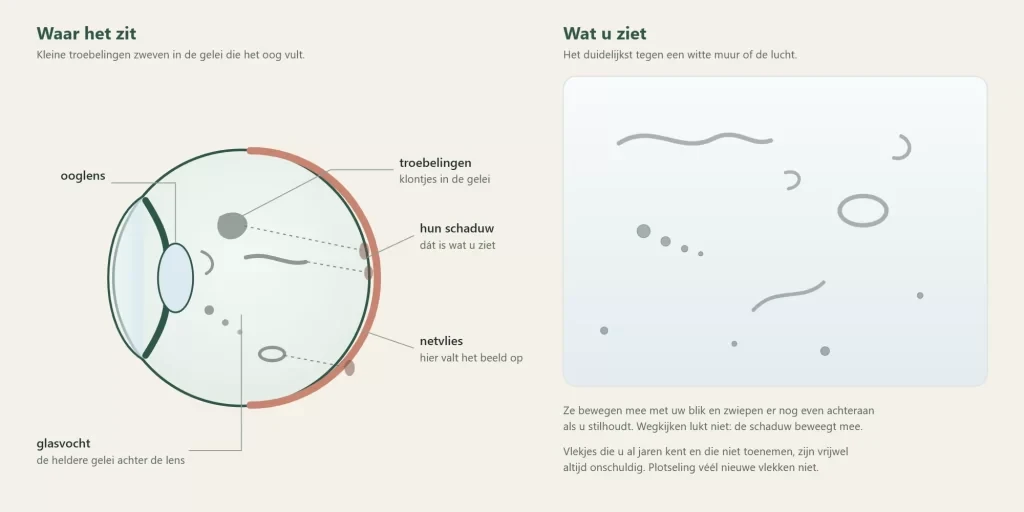
Drawing of floaters in the vitreous casting a shadow on the retina
Left: the opacities float in the vitreous and cast a shadow on the retina. Right: how they look against a light background. Own drawing.

Symptoms

  • Threads, flecks or cobwebs that move with your gaze
  • More visible against a light background, such as a white wall or the sky
  • Sometimes brief flashes at the side, especially in the dark
  • Vision itself stays good

How it develops

With age the vitreous becomes more liquid and its protein clumps together; these clumps cast shadows on the retina. Eventually the vitreous detaches from the retina. This happens earlier in short-sighted people, after cataract surgery and after a blow to the eye.

Treatment

  • Examination of the retina with dilated pupils to rule out a tear.
  • Without a tear no treatment is needed: the brain learns to ignore the spots, usually within weeks to months.
  • A retinal tear can be sealed with laser to prevent detachment.
  • If symptoms change within a few weeks, have it checked again, even if the first check was fine.

When to get help the same day

Contact your GP or the out-of-hours GP service (huisartsenpost) straight away if you have:

  • Suddenly many more spots than usual, like a swarm or shower of soot
  • Flashes of light that persist or increase
  • A curtain or shadow rising from the edge of your vision
  • Vision that quickly gets worse

This page is a short summary and does not replace a consultation. Want to know how the eye works? See The eye.