
Glaucoma

Damage to the optic nerve, often due to high eye pressure. You usually notice it late.
In short

  • In glaucoma the fibres of the optic nerve are slowly lost, usually due to high eye pressure.
  • Damage starts at the edges of your visual field, so you notice nothing for a long time.
  • Lost vision does not return. Treatment slows the damage, which is why early detection matters.
  • Treatment usually starts with daily eye drops. Using them faithfully is what counts most.
  • Glaucoma runs in families: brothers, sisters and children should be checked too.
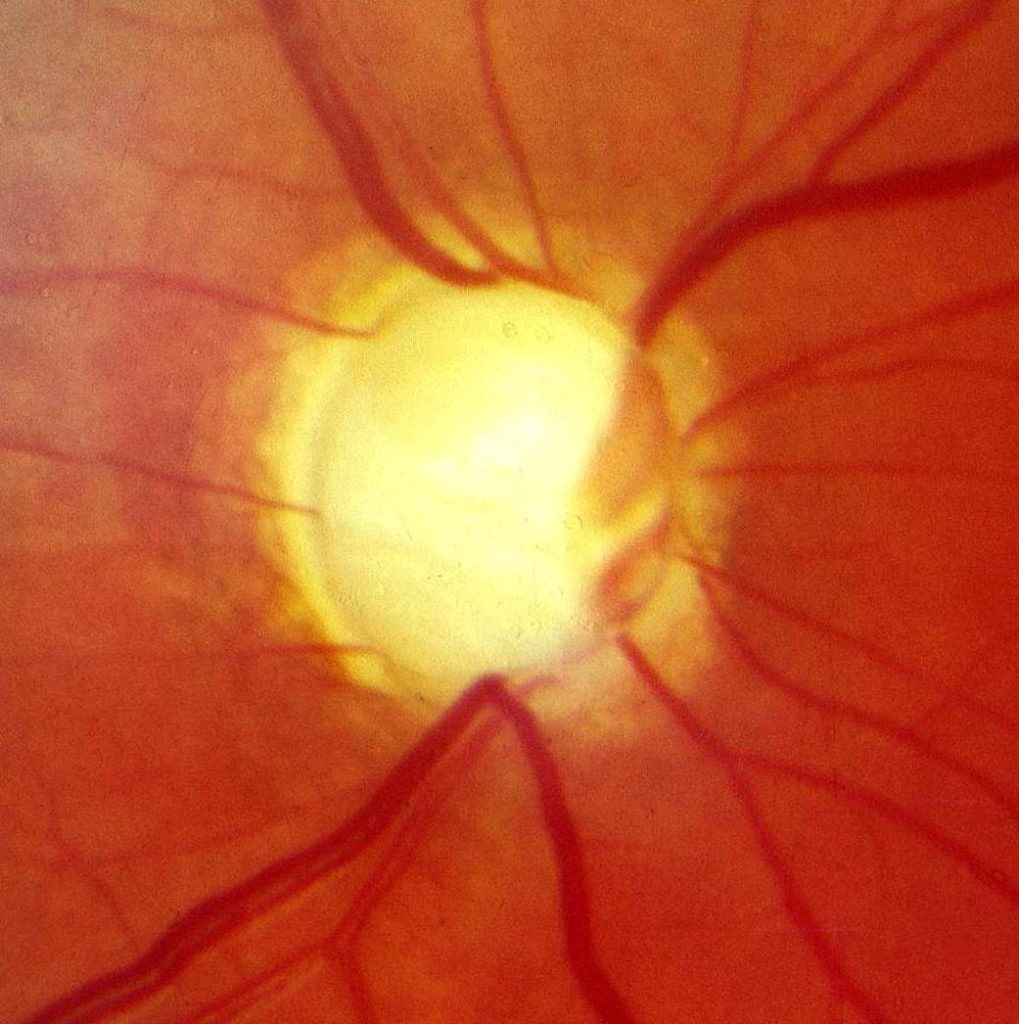
Optic nerve head with a deep cup in advanced glaucoma
The optic nerve head in advanced glaucoma, with a deep cup Snoop, CC BY-SA 3.0. Via Wikimedia Commons.

Symptoms

  • No symptoms at first; that is what makes glaucoma tricky
  • Later, reduced vision at the sides, or bumping into things more often
  • Central vision stays good for a long time, so it is noticed late
  • In the acute form: severe pain, nausea, a red eye and halos around lights

How it develops

The fluid in the eye does not drain well, so pressure rises and the optic nerve fibres are slowly lost. The risk increases with age, family history, strong short-sightedness and certain ethnic backgrounds. In the acute form the drainage angle suddenly closes.

Treatment

  • Measuring eye pressure, assessing the optic nerve and testing the visual field.
  • Treatment usually starts with pressure-lowering drops, used long term and faithfully.
  • Laser treatment and surgery are also options.
  • Treatment stops further damage but cannot undo it, so early detection matters.
  • Regular check-ups remain necessary, even when your vision feels fine.

When to get help the same day

Contact your GP or the out-of-hours GP service (huisartsenpost) straight away if you have:

  • Sudden severe eye pain with nausea or vomiting
  • Halos around lights with blurred vision
  • A red eye that feels hard
  • Rapidly developing loss of part of the visual field

This page is a short summary and does not replace a consultation. Want to know how the eye works? See The eye.